October 2025. Sam Altman appears in a YouTube broadcast to announce OpenAI’s next big innovation. The expectation is for something revolutionary, but something’s off.
Sam doesn’t seem… excited. He doesn’t have that gleam in his eyes of someone launching something that truly matters. He seems to be going through the motions. Reading a script. Checking off another item on the to-do list.
And maybe he is.
The War Nobody Asked For
In recent months, we’ve become hostages to an absurd arms race:
- January 2025: The Browser Company announces Dia
- March 2025: Perplexity launches Comet (with genuinely interesting features)
- May 2025: Chrome tests “AI Mode” in closed beta
- June 2025: Atlassian acquires The Browser Company (and promises its own browser)
- October 2025: OpenAI launches Atlas
Everyone running. Everyone launching. Everyone afraid of being left behind.
But nobody asked: left behind from what?
The truth is, if you blink, you’ll miss the launch of a new “revolutionary browser.” The Atlas announcement is just one among those that have already emerged, and those that will emerge soon. It was received with the expected noise. But once the initial euphoria passes, the question remains:
Is that it?
The Problem with Late Innovation
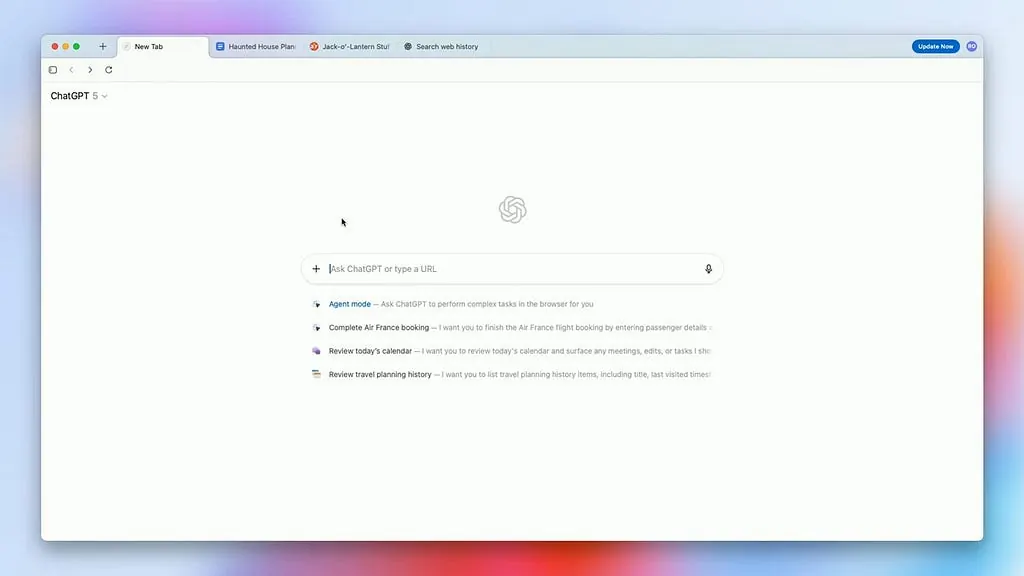
Don’t get me wrong. Atlas is beautiful. It’s fluid. It’s undoubtedly a powerful tool for those already living in the ChatGPT ecosystem.
But it’s not innovative.
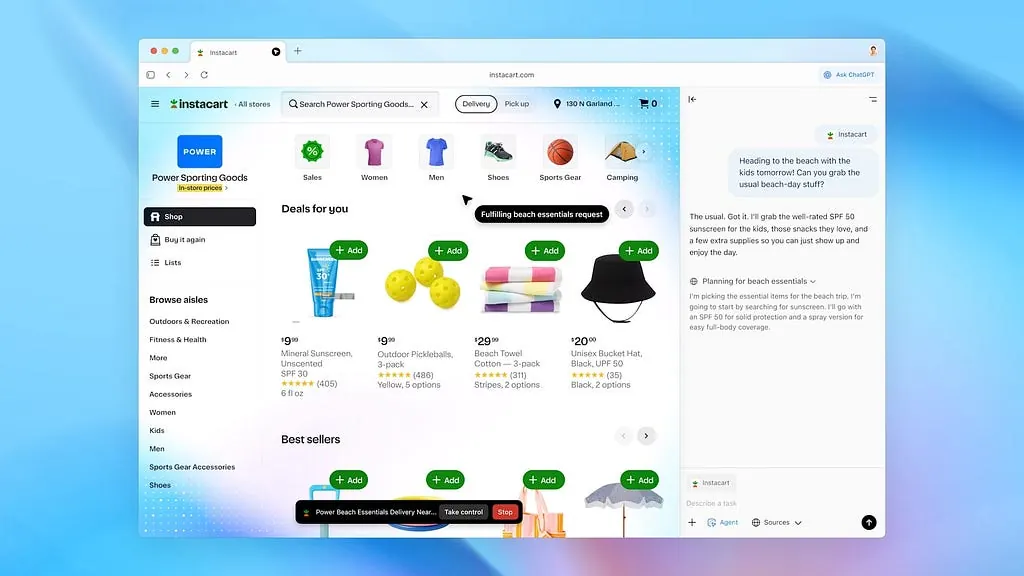
Atlas’s supposed “revolution” consists of features the market has known for months. Deep AI integration in browsing, the ability to “talk to the page,” the “agent mode” that executes tasks… all of this was already functional (and in some cases, better) in Perplexity’s Comet.
Atlas doesn’t look like a leap forward. It looks like a defensive move, a “check” on a list of features competitors already had.
It’s a product born not from vision, but from the fear of being left behind.
Sam Altman’s Visible Boredom
Perhaps the clearest evidence of this wasn’t in the software, but in Sam Altman himself during the presentation.
He seemed bored.
There wasn’t the disruptive energy of the GPT-4o launch. There wasn’t the philosophical conviction of his essays on AGI. There was only the posture of someone fulfilling a protocol.

We can only speculate, but the image is powerful: a CEO who is visibly more interested in building the next paradigm of intelligence, but who is forced by market pressures (and perhaps anxious investors) to stop everything and launch… a browser.
A browser that, deep down, is a beautiful template running on top of his biggest competitor’s code base: Google’s Chromium.
Atlas doesn’t seem to be Altman’s dream project. It seems to be the homework he had to turn in to justify the valuation.
The Gorilla in the Room: The Owner of the Playground
This entire “war” (Arc, Atlas, Comet) has an air of futility for one simple reason: they’re all playing in Google’s backyard.
Chromium belongs to Google.
While these startups fight over market share crumbs, Google watches, takes notes, and prepares for the only move that truly matters.
What will happen when Google actually decides to integrate Gemini natively into Chrome? Not an “AI Mode” hidden in a menu, but a total fusion. A browser where AI isn’t an additional feature, but the very essence of the experience.
When Chrome becomes the “Gemini OS,” what will be left for Atlas or Comet?
That’s the big question, the real concern.
All expectations are directed at Google, which so far hasn’t shown what it’s capable of, but has everything it needs to shake the foundations. And here’s the critical point nobody wants to admit:
While Atlas, Comet, and Dia need to use Chromium’s public APIs, Google can modify the engine at its core. It can optimize specifically for Gemini. It can integrate in ways third parties can’t even access.
It’s like playing chess, but your opponent is the one who made the board.
The Burden of Being OpenAI
Here’s the trap of success.
To be honest, Atlas is an elegant product. The design is tasteful and there are subtle UI solutions that are very welcome. For an average user who’s never heard of Perplexity, Atlas is magical.
But the problem is that OpenAI is no longer evaluated as a regular company.
They’re the leaders of the revolution. And the price of being the innovator is that the market no longer expects you to launch “good” products. The market expects you to change the game every six months.
For those following the AI market, Atlas is “nothing special.” It’s an incremental product. And when OpenAI does something merely “incremental,” it feels like a failure — even if it’s a good product.
It’s the curse of creating your own expectations.
The FOMO Strategy
So, if it’s not innovative, why launch it?
Because Atlas isn’t a product of vision; it’s a product of necessity.
OpenAI, the company that created FOMO (Fear of Missing Out) in all other big techs, has become a hostage to its own success. They needed to have their own browser. Not because they had a revolutionary idea, but because everyone else was having one.
This just shows how ugly this AI fight has become. Nobody wants to be left behind. And in this new market, “waiting a bit longer” to polish a product or to have a truly disruptive idea isn’t an option.
Waiting is synonymous with being left behind.
It’s losing market share. It’s letting Perplexity gain traction or giving Google time to wake up.
The logic of Sam Altman and his investors seems clear: it’s better to launch now a product that doesn’t innovate than to wait and risk becoming irrelevant.
Atlas is proof that, in the AI war, speed is now worth more than depth.